
Blog post authored by: Katya Ferriera Healthy Futures Intern 2025
On July 3, 2024 the Queen Elizabeth Hospital (TQEH) in South Australia opened the Kangkanthi Building, an all-electric five-storey clinical facility spanning 27,000 square metres.
The $314 million redevelopment project replaced the hospital’s ageing 1950s tower and meets the needs of the region’s growing western population.
The name Kangkanthi (pronounced gun-hun-dee) comes from the Kaurna language and means 'to care.' This name reflects the hospital's active engagement with the Kaurna Elders, community leaders and consumers, and its commitment to providing a culturally safe, welcoming and inclusive hospital in design and practice. The building integrates Aboriginal culture through Kaurna language signage, artwork and photography that reflect life and traditional customs.
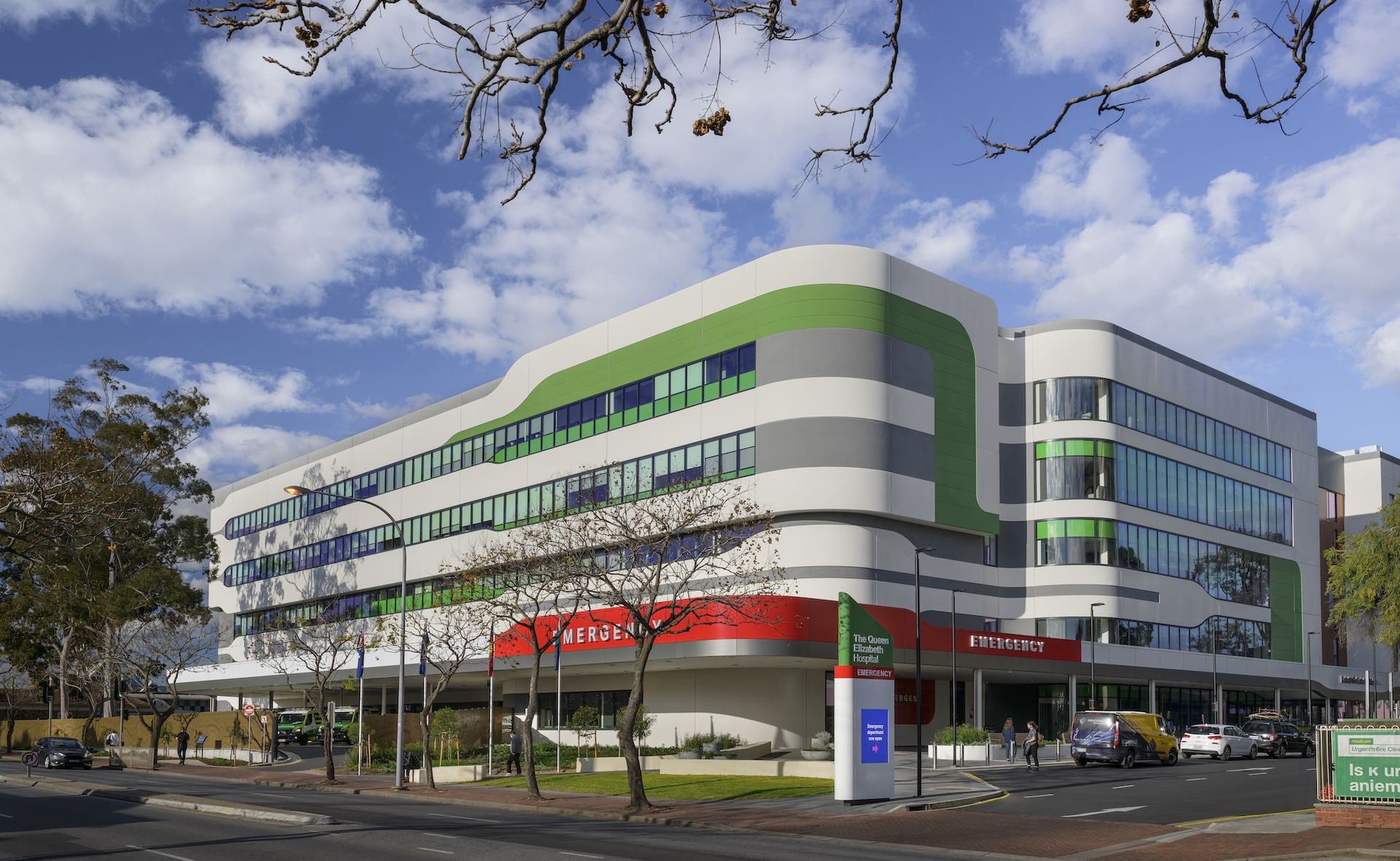
Source: https://www.tqeh.sa.gov.au/tqeh-redevelopment/kangkanthi-building
In a time of growing concern about the health impacts of climate change, the Kangkanthi Building shows how hospitals can lead with resilient, environmentally conscious design. The new building was awarded a 6-star in-house green rating for its sustainability achievements in both design and construction to reduce emissions while improving comfort for patients, visitors and staff.
Key sustainable features include:
- A fully electric, gas-free design, cutting fossil fuel emissions
- Heat pump technology, replacing gas boilers for hot water and heating
- Increased insulation and glazing to reduce heat loss and boost energy efficiency
- Optimised natural light and access to green outdoor spaces
The fully electric, gas-free building is projected to save the hospital an estimated $100,000 annually and reduce carbon dioxide emissions by 597,000 kilograms each year, representing a 41.8% reduction in emissions for the building alone.
In 2021, the hospital also installed 370 kilowatts of rooftop solar on its car park. These panels generate over 567,000 kilowatt-hours of electricity annually, resulting in a 3.4% reduction in electricity consumption.
The building is also wired for an additional 450 kilowatts of solar, which could generate over 675,000 kilowatt-hours of electricity each year. Once installed, this would reduce the hospital's total electrical consumption by 7.4%.
But sustainability is just the beginning. The Kangkanthi building has also expanded its capacity to deliver patient-centred care.
New facilities include:
- A 46-bay Emergency Department, equipped with two resuscitation bays, a short stay unit and a safe assessment area
- A 14-bed Intensive Care Unit, enhanced with a simulation laboratory for training
- 12 operating theatres with preoperative and recovery spaces
- 4 procedure rooms and a cardiac catheterisation laboratory
- 52 inpatient rehabilitation beds with therapy and gym facilities to support recovery
- A Central Sterilising Services Department
- Advanced imagery and pathology services, including X-ray, CT, MRI and SA Pathology
And it’s not stopping there. Construction is already underway on a dedicated 24-bed mental health rehabilitation centre, set to open in late 2025 directly across from the hospital.
The Kangkanthi Building marks a new chapter in Australian healthcare: one that is clean, connected and climate-ready.